
Carving -Be the pilot, not the passenger!
What: Medium to long turns
Who: Confident intermediate skiers to advanced skiers looking for more understanding.
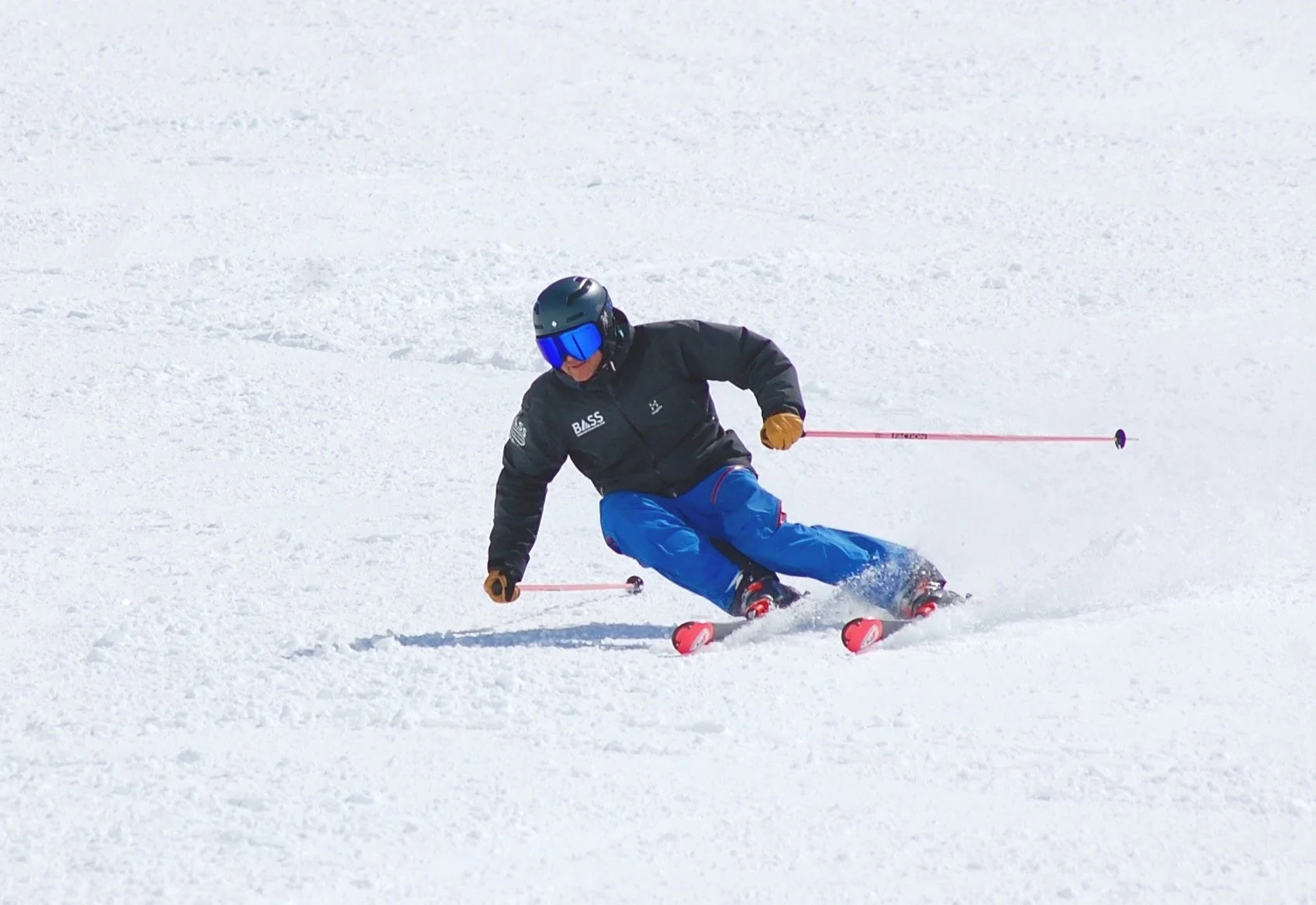
There is no big secret to carving, tilt your skis and let the skis take you around the arc in clean lines. But what does that all mean?
1. Tilt. 2. Let the ski take you. 3. Around the arc. 4. clean line.
Effective, exhilarating, powerful and dynamic carving will come from your understanding and application of the 4 points. In this article, I will try to show you how you can move up from the passenger seats to be the pilot of your skis.
WATCH THE VIDEO LESSON

1. Tilt
Why? The parabolic design of your skis (The side cut/sides) is shaped to take you around an arc. The tip and tail of the skis are wider than the middle under your foot. When the ski is on its side and you are standing against it, the ski bends like a bow.
Let’s think about making the movements needed, from the ground up. Rolling your ankles over will start to tilt the ski. Add the knees to the movement and you already have the ingredients of carving on an easy slope. As you move faster, you will become balanced enough to add the hips to the inclination of the knees and ankles. The upper body is separated from this inward motion of the legs and the shoulders stay level to the horizon to keep you balanced against the turning ski.
“Next time you are on the slopes, watch how many skiers start the movement by throwing their shoulders into the turn or end up leaning into the hill with their whole body. These skiers are never truly balanced and very rarely carving.”
Summary: Roll the ankles into the turn and let the knees and hips follow to create the angle you need. Separate The upper body to keep the shoulders level to balance against the outside ski and manage the forces that build.
Tip. Practice with a wider stance, which will help achieve a greater angle in the lower joints and reduce rotation.

2. Let the skis take you.
TWIST OR STICK?
If you twist the skis, you are using rotation which will force the skis to turn quicker than they are able to do on an edge (Skidding) At this point in your skiing it is time to leave behind old habits. You will need to move on from turning the skis with your feet or body. Once you have tilted the ski it will take you around the corner. The more you tilt the sharper the bend. This effect is complimented by resisting against the forces placed upon the ski. The stronger you stay in the legs, the tighter the arc will be. The further your hips move away from your feet, the more dynamic your turns will become.
A small amount of tilt keeping the legs relaxed will produce a wide, long arc that will take up the whole slope. Fun and Fast if you have the space and a quiet slope to try it on.
Summary: Manage your rate of turning by tilting the skis more and resisting against the forces to turn shorter arcs. Tilt the skis less and absorb the forces to lengthen the arc. The faster you go the more forces build allowing you grater balance to move your centre of mass inside.
Tip: Start on a moderate slope tilting just the ankles, then the knees and build up speed until you can add the hips. Gradually increase the steepness of slope and experiment with harnessing or softening the forces that build.
3. Around the Arc
There are two ways to skin this cat.
1. This is the more traditional thought of linking C-shaped arcs together.
2. Possibly new to you, is to think of the line you take as linking S’s together.
For simplicity’s sake we are going to start with 1, C-shaped arcs. Let’s divide the arc into 3, a start (Build) a middle (Work) and an end (Release). Each part taking up 1/3 of the arc.
Start (Build)
Start the turn by rolling the ankles in the new direction. Increase the angle by retracting the inside leg. This action is often called “Reverse Peddling” where you pull the foot up rather than pressing it down. This will gradually build the edge and give you a smooth entry into the turn.
It is worth mentioning at this point that the action of making one leg shorter (More bent) than the other draws the centre of mass into the arc so that it takes a shorter line than the feet.
Middle (Work)
This is where you need to put something in to get something out (Effort) Through this second phase your legs/skis will be at their maximum angle. You will have to work hard to separate your upper body and counter balance the incline of your legs and keep you standing against the turning ski. Drive the outer hand or elbow to keep the shoulders level.
End (Release)
Your Centre of Mass now needs to come from all the way inside the arc to return over your feet for the crossover into the next turn. This can be achieved by softening the outer leg or more actively by starting the reverse peddling.
4. Clean Lines
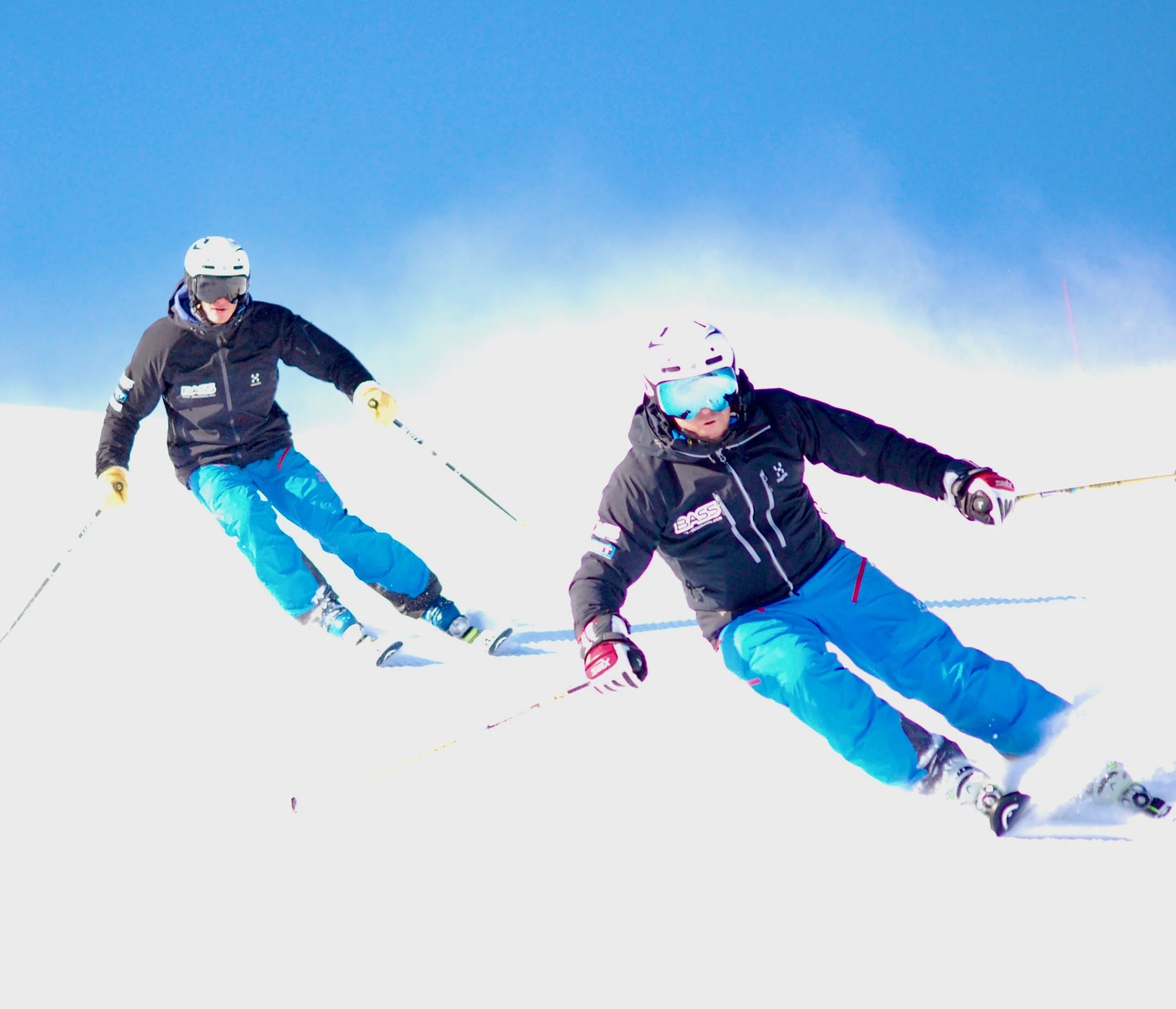
Staying low as your centre of mass moves into the next turn and rolling the ankles as you reverse pedal will place the skis on an edge right at the top of the turn. Continuing the lateral movements will build the edge. As long as the skis shape (Side cut & bend) are doing the turning the skis will leave clean, sharp lines in the snow, as seen in the video clip on carving. You are now piloting the skis, steering with edge angle and pressure management.
Drills and Actions
Reverse peddling
Changing from the right turning ski to the left turning ski be retracting the lower foot to pull the centre of mass from one side to the other rather than stepping onto the upper ski which keeps the centre of mass over the feet.
The Robin Hood Effect
Drawing a bow needs one arm to be outstretched and strong to hold the bow (1) and one arm to pull back the string (2).
1, is the outside leg. 2. Is the inside leg. The more the inside leg bends the more power is transmitted to the turning ski (Shortening the arc)
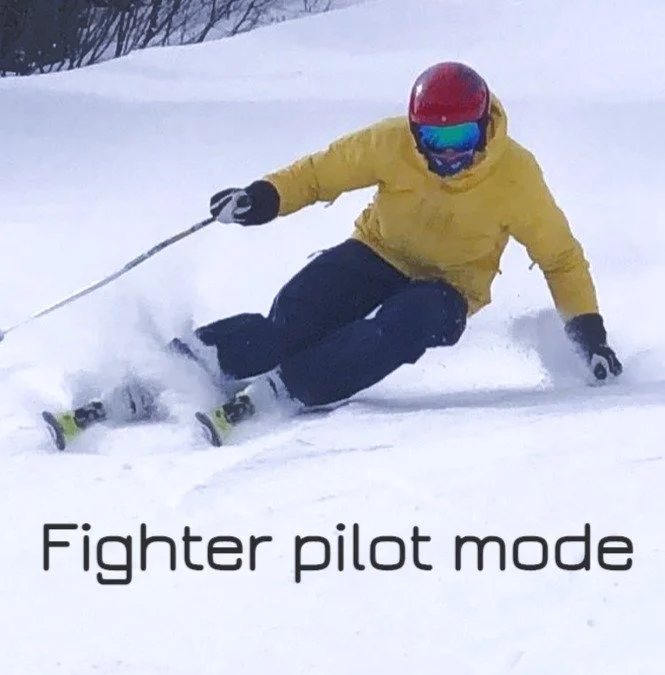
Fighter pilot
Putting all the above together in an effective performance.
Crab Snowplough
In plough sliding down a shallow slope roll one ankle in until that ski deflects you across the slope. This shows you have created enough angle for the ski to work. Do the same the other way. There should be no rotation of the feet so that you move like a crab across the slope.